PACC Expresses Strong Support for DPWH Reform Initiatives
Quezon City, Philippines (February 24, 2026)
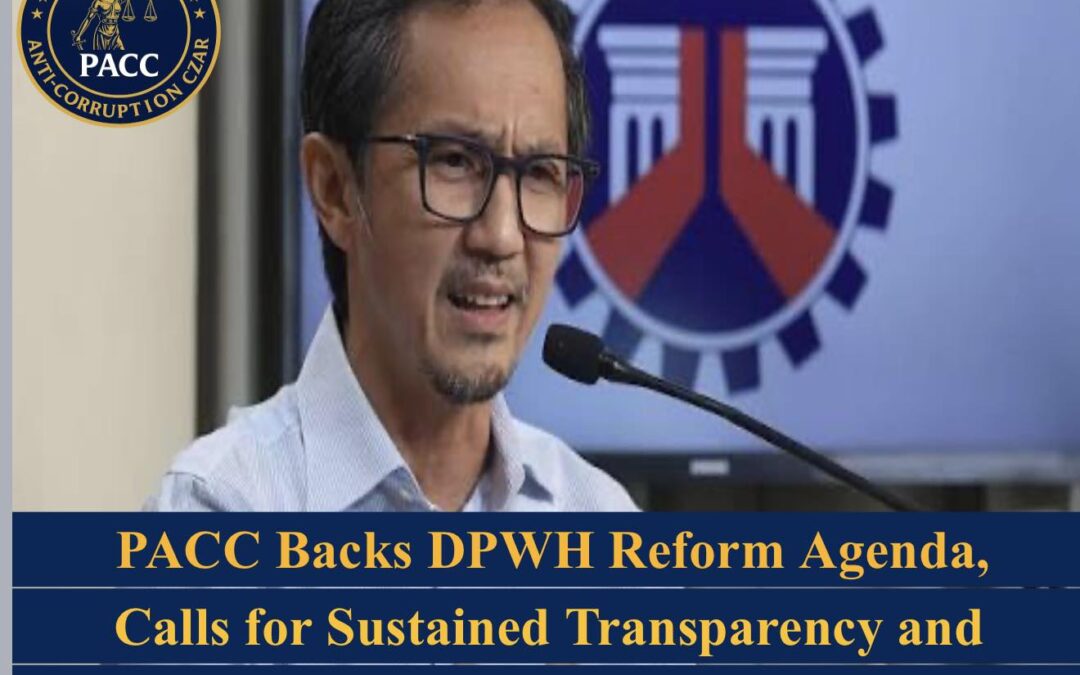
The Philippine Anti-Corruption Czar (PACC), through its Chairman Dr. Louie F. Ceniza, PhD, has expressed strong support for the reform initiatives currently being implemented by the Department of Public Works and Highways (DPWH), while reaffirming its firm commitment to continue independent monitoring of government infrastructure projects.
In an official statement, Chairman Ceniza acknowledged the public outrage over the massive flood control corruption scandal that has dominated national discourse in recent months. He emphasized that the alleged misuse of public funds—intended to safeguard communities from disasters—has significantly eroded public trust and adversely affected both governance and economic confidence.
“Corruption is not merely a moral issue; it is an economic threat. When economic growth slowed to 3 percent in the fourth quarter of 2025, partly due to weakened infrastructure spending and declining confidence, it became clear that corruption steals not only money—it steals growth, opportunity, and trust.”
Despite justified public anger, the PACC Chairman stressed the importance of recognizing and supporting genuine institutional reforms designed to address systemic weaknesses.
Key Reform Initiatives Welcomed by PACC
- Strategic Infrastructure Spending — A shift toward prioritizing wise allocation of funds, focusing on long-delayed maintenance projects and completion of stalled infrastructure nationwide.
- Fast-Track Procurement System — A proposed procurement mechanism for vetted contractors with clean track records to distinguish reputable firms from erring companies and strengthen accountability.
- Blockchain-Powered Public Ledger — A transparency initiative allowing citizens to monitor infrastructure projects in real time, reducing opportunities for concealment and manipulation.
- Performance-Based Appointments — Professionalizing DPWH leadership through measurable standards based on project quality, maintenance, and disaster response performance.
- Hiring of 2,000 Engineers and Accountants — Injecting technically competent and ethically grounded professionals into the agency to rebuild institutional credibility.
- Reforms at the Philippine Contractors Accreditation Board (PCAB) — Strengthening contractor licensing based on integrity, capability, and compliance rather than political influence.
- Private Sector Representation — Granting the private sector a permanent seat in regional development council planning to promote inclusive governance and shared accountability.
“Supporting reform does not mean lowering our guard.”
The PACC will continue to conduct independent monitoring of infrastructure projects—particularly flood control systems, bridges, and road networks—before, during, and after construction. The agency remains vigilant against ghost projects, cost padding, substandard materials, and collusion between officials and contractors.
Chairman Ceniza noted that if sustained and implemented sincerely, the current DPWH reforms could serve as a model for transformation across other government agencies facing credibility challenges.
“The cleansing of government will not happen overnight. It requires political will, institutional reform, private sector cooperation, civil society vigilance, and citizen participation.”
“The Filipino people do not expect perfection. They demand accountability. They deserve transparency. And they must see results.”
The PACC reaffirmed its readiness to work with DPWH and all reform-oriented institutions to ensure that every peso of public funds translates into real infrastructure, real protection for communities, and real national progress.